
Planning
How Many Guests Can a Photo Booth Actually Handle Per Hour?
Most companies answer this with great for groups. Here are the real numbers per booth, the arithmetic for a 150 guest wedding, and the reason a line still forms at hour two.
Short answer
A standard enclosed print booth moves about 45 guests per hour. An open air digital booth moves 50 to 60. A 360 booth moves about 40, because it takes one turn at a time. A headshot booth clears 120 to 180 people across a three hour window.
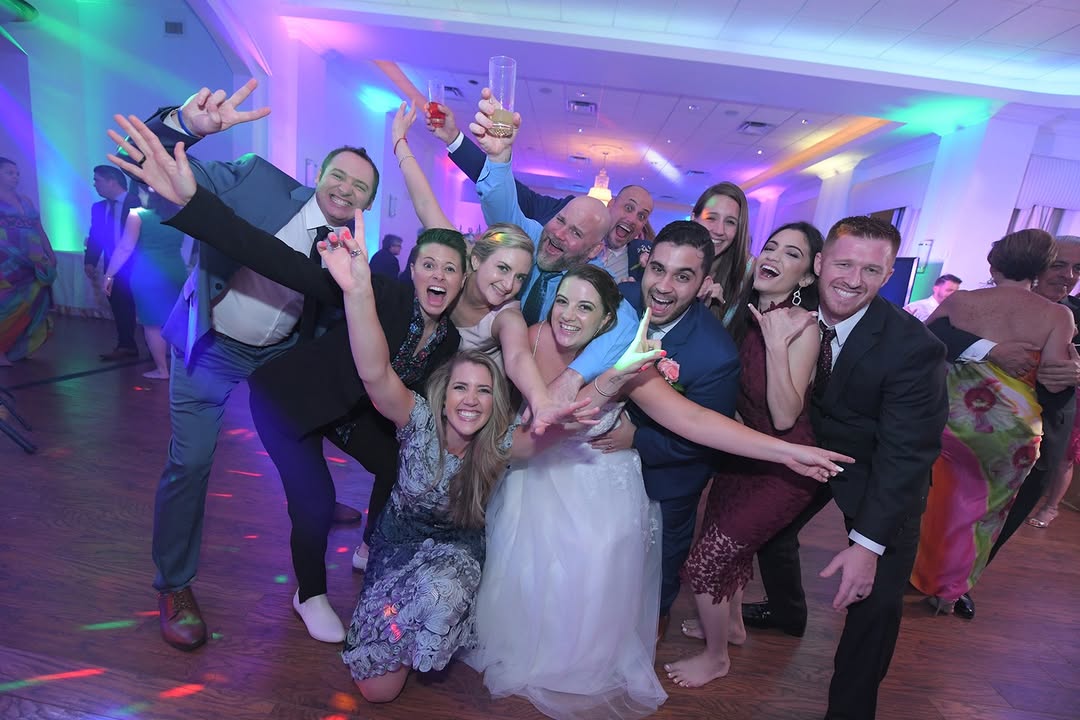
How many guests can a photo booth handle per hour?
A Classic enclosed print booth moves about 45 guests per hour. A Social open air booth moves 50 to 60. A 360 booth moves about 40. A Headshot booth clears 120 to 180 people across a three hour window. Those are the numbers Motion runs on, and they are the numbers you should plan your night around.
Almost nobody in this industry publishes them. Read the top ranking photo booth pages in South Florida and capacity is described as great for groups, or keeps the party moving. Neither of those tells you whether one booth covers 150 people in three hours. This page does the arithmetic instead.
Guests per hour by booth type
| Booth | Guests per turn | Throughput | Included time at starting price |
|---|---|---|---|
| Classic (enclosed, prints) | 1 to 10 | About 45 per hour | 3 hours at $749 |
| Social (open air, digital first) | 1 to 10 | 50 to 60 per hour | 2 hours at $399 |
| 360 | Up to 7 guests, 1,200 lb limit | About 40 per hour | 3 hours at $699 |
| Headshot | 1 at a time | 120 to 180 per 3 hour window | 3 hours at $599 |
| AI | 1 to 10 | About 45 per hour | 3 hours at $850 |
| Brand Activation | 1 to 10 | 50 to 60 per hour | 4 hours at $2,500 |
The open air booth is the fastest of the group formats because there is no door, no curtain and no stepping in and out. The 360 is the slowest because it is a platform, and a platform holds one group at a time while the arm goes around and the clip renders.
Guests per hour is not the same as photos per hour
This is where most capacity estimates fall apart, so it is worth being exact. A turn is one group stepping up, posing, and walking away with output. Guests per hour counts the people who took a turn. It does not count how many times the camera fired, and it does not count unique faces.
At a wedding, group size at a booth tends to land somewhere between two people and five. So a booth running at 45 guests per hour is firing far fewer than 45 sessions. It might be fifteen sessions with an average group of three. That matters because the time cost sits on the session, not on the head. Six people take one session, not six.
The second correction is repeat visits. Guests come back. The same six friends will use the booth at 9pm and again at 10:30 with different props and a different drink in hand. Throughput counts both trips. So 135 guest turns at a 150 person wedding does not mean 135 different people were photographed.
Plan on turns, not headcount
Treat throughput as trips through the booth. If you want most of the room to get at least one turn, you need available turns comfortably above your guest count, not equal to it. Repeat visits are the point. A booth nobody returns to is a booth nobody liked.
What 150 guests and three hours actually looks like
Take the most common South Florida wedding shape: about 150 guests, a three hour booth window that opens after dinner. Here is what each booth produces in raw turns, using the throughput figures above and nothing else.
Available guest turns by booth and rental length
| Booth | 2 hours | 3 hours | 4 hours |
|---|---|---|---|
| Classic | About 90 | About 135 | About 180 |
| Social | 100 to 120 | 150 to 180 | 200 to 240 |
| 360 | About 80 | About 120 | About 160 |
| Headshot | 80 to 120 | 120 to 180 | 160 to 240 |
Now the fraction you actually asked for. A Classic at three hours produces about 135 turns. Against a 150 guest room that is 90 percent of the head count, but only if every single turn is a different person. That never happens. Treat 90 percent as the ceiling and expect the real unique guest coverage to land well under it, because a meaningful share of those 135 turns are the same people coming back.
The Social at three hours produces 150 to 180 turns, which clears the head count outright and leaves room for repeats. The 360 at three hours produces about 120 turns against 150 guests, which is 80 percent at the ceiling. That is the honest reason a 360 at a large wedding tends to leave people out. It is not that the 360 is worse. It is that one platform, one group at a time, is a narrower pipe.
The four things that actually slow a booth down
Printing time
A print takes 10 to 12 seconds. On its own that is nothing. Stacked, it is the difference between a line and no line. A group of six who each want their own copy is 60 to 72 seconds of printing attached to one session. Do that six times in a row and you have burned six minutes of the hour on paper alone.
This is the single biggest reason a digital first open air booth runs faster than an enclosed print booth. Same camera, same posing time, no printer in the critical path.
The 360 takes one turn at a time
The platform holds up to 7 guests with a 1,200 lb limit, and the arm has to complete its pass before anyone steps off. Then the clip has to process before it can be sent. Nobody can start the next turn during either of those steps. That serial structure, not the camera, is what puts the 360 at about 40 guests per hour instead of 50 to 60.
Group size cuts both ways
Bigger groups raise people per turn, which helps. They also take longer to arrange, which hurts. A group of ten spends real time getting everybody in frame, and somebody always leaves to get a drink and comes back. In practice the two effects roughly cancel, which is why a single throughput figure holds up across different crowds.
The peak hour
This is the limiter that ruins otherwise sound planning, and it gets its own section below.
Why the line forms in one specific hour
Traffic at a booth is not spread evenly across the rental. A reception runs on a schedule. Guests are seated for dinner, then seated for speeches, then released all at once when the dancing starts. The booth sits nearly idle for the first stretch and then takes the entire room in a single window.
Couples on wedding forums arrive at the same conclusion without the numbers. The most repeated piece of advice in those threads is to not open the booth until dinner and the speeches are finished. That advice is correct, and throughput is why: an hour of booth time during a plated dinner is an hour you paid for and nobody used.
Here is the part that surprises people. Extra hours do not fix a peak. If half your night wants to happen inside one 60 minute window, a booth rated at 45 guests per hour will move 45 guests in that window regardless of whether you booked three hours or six. Hours buy total coverage. They do not widen the pipe.
Hours buy total coverage. They do not widen the pipe. If the line is the problem, another hour is not the fix.
When two booths beat one longer rental
This is the honest version of a question most vendors answer by selling you the upgrade. Compare what each option actually buys.
An extra hour on the Classic runs $150 to $250 and adds about 45 turns. Those turns land at the tail of the night, which is the lowest traffic part of the rental. You are buying capacity at the exact time nobody is queueing.
A second booth adds capacity during the peak instead. A Social booth at $399 for two hours adds 50 to 60 turns per hour, and it adds them in the window where the line exists. It also splits the crowd physically, which matters in a room where the booth is tucked into one corner and half the guests never walk past it.
The actual trade
An extra hour costs $150 to $250 and adds about 45 turns at the quietest part of the night. A second Social booth costs $399 for two hours and adds 100 to 120 turns during the busiest part. If your problem is a line, the second booth is the better dollar. If your problem is the night running long, the extra hour is.
Now the concession. Most events do not need two booths. For a 100 to 150 guest wedding, one booth at three hours is enough, and a second one is money spent on capacity you will not use. Two booths start to make sense when your head count exceeds what one booth can produce in the hours you booked, which for a Classic at three hours is about 135 turns, or when the event is split across two spaces, or when a corporate reception compresses everything into a fixed two hour window.
What to ask a photo booth company before you book
If throughput matters to you, these five questions separate a company that has measured its own product from one that has not.
- How many guests per hour does this specific booth move, and is that number in writing anywhere on your site?
- Is idle time billed separately, or does it count toward my booked hours?
- How fast does the printer produce a single print, and does everyone in a group get a copy?
- Is an attendant included, or is that a line item? An unattended booth loses time on every turn.
- What happens if the printer or the camera fails mid event?
Motion answers those the same way every time. Throughput is published on this page. Idle time is not a separate charge and counts toward the booked hours. Print speed is 10 to 12 seconds. An attendant is included on every booking, and the attendant is the reason the throughput numbers hold, because somebody is moving the line and resetting props between turns. Every job carries a backup camera and a backup printer, and the crew is on site 60 minutes before doors.
What Motion charges, and where these numbers come from
The Social open air booth is $399 for 2 hours at 50 to 60 guests per hour. The Headshot booth is $599 for 3 hours at 120 to 180 people. The 360 is $699 for 3 hours at about 40 guests per hour. The Classic enclosed print booth is $749 for 3 hours at about 45. The AI booth is $850 for 3 hours, and the Brand Activation booth is $2,500 for 4 hours. An extra hour is $150 to $250 depending on the booth.
Those prices are published, not gated behind a form. Broward, Miami-Dade and Palm Beach carry no travel fee. Idle time is not billed as an extra, an attendant is included on every booking, and the work is backed by a written guarantee.
If you know your head count and your window, the throughput table above tells you which booth clears the room. See full pricing for every booth, or send over your guest count and timeline and we will tell you plainly whether one booth is enough.
Common questions
How many guests can a photo booth handle?
About 45 guests per hour for an enclosed print booth, 50 to 60 for an open air digital booth, and about 40 for a 360. Over a three hour rental that is roughly 135, 150 to 180, and 120 guest turns. Those are trips through the booth, not unique faces, because guests come back.
How many people can fit in a photo booth at once?
The Classic and Social booths take 1 to 10 guests per photo. A 360 platform holds up to 7 guests with a 1,200 lb weight limit. A headshot booth photographs one person at a time by design, since the whole point is a clean individual portrait.
Do I need two photo booths for a 200 person wedding?
Probably yes if your window is short. One Classic at three hours produces about 135 guest turns, which is under a 200 person head count before you account for repeat visits. A second open air booth adds 50 to 60 turns per hour during the peak. One booth at four hours only adds about 45, and adds them late.
How long does a 360 photo booth video take?
The arm pass itself is quick, but the full turn includes loading up to 7 guests onto the platform, the rotation, stepping off, and the clip processing before it can be sent. That serial sequence is why a 360 runs at about 40 guests per hour instead of the 50 to 60 an open air booth manages.
How long does it take a photo booth to print a photo?
10 to 12 seconds per print. That sounds trivial until a group of six each want their own copy, which attaches a full minute of printing to a single session. Printing is the main reason an enclosed print booth runs slower than a digital first open air booth using the same camera.
Should the photo booth be open during dinner?
Usually not. Guests are seated and the booth runs nearly empty, so you spend booked hours on an idle machine. Open it after dinner and the speeches. Just be aware that concentrating traffic creates a peak, and a booth rated at 45 guests per hour still only moves 45 in that hour.
Does idle time count against my rental hours?
At Motion, yes, and it is not an extra charge. If the booth is covered and closed during dinner, that time counts toward the hours you booked rather than appearing as a separate idle fee on the invoice. Some companies bill idle time as its own line item, so ask before you sign.
Motion Event Productions
Every price on this page is on our pricing page
No form to see a number. No travel fee in Broward, Miami-Dade or Palm Beach. Idle time counts toward your booked hours instead of being billed on top. An attendant comes with every booking.
Keep reading